Cheerleading fundraisers are organized efforts that help teams cover uniforms, travel, competition fees, and everyday expenses while building local support and team unity. This guide explains why different fundraiser types work—event-based, product-based, and online—and the practical benefits each delivers for school and youth cheer programs.
Which Cheerleading Fundraisers Work Best for Teams?
A good fundraiser balances expected revenue, volunteer needs, and the team's goal. Event fundraisers deliver quick local income, product sales offer predictable margins when promoted well, and online campaigns expand reach and invite repeat giving. A simple mix—one major event, one product push, and an ongoing online effort—diversifies income and lowers risk.
Car wash fundraiser
Low cost ($50-$200 supplies), moderate revenue ($300-$1,000/day). Best for short-term travel funds.
Cheer clinic fundraiser
Low cost, moderate-high revenue per attendee. Great for youth outreach and uniforms.
Spirit wear sales
Medium cost, high margin with pre-orders. Ideal for ongoing competition fee revenue.
Digital discount card fundraiser
Very low overhead, moderate per-card margins. Perfect for recurring small-donor support.
Dance-a-thon fundraiser
Raises funds through per-minute pledges, gets families involved and builds team unity.
Events like car washes, dance-a-thons, and clinics turn team visibility into cash by offering a straightforward service or entertainment to the neighborhood.
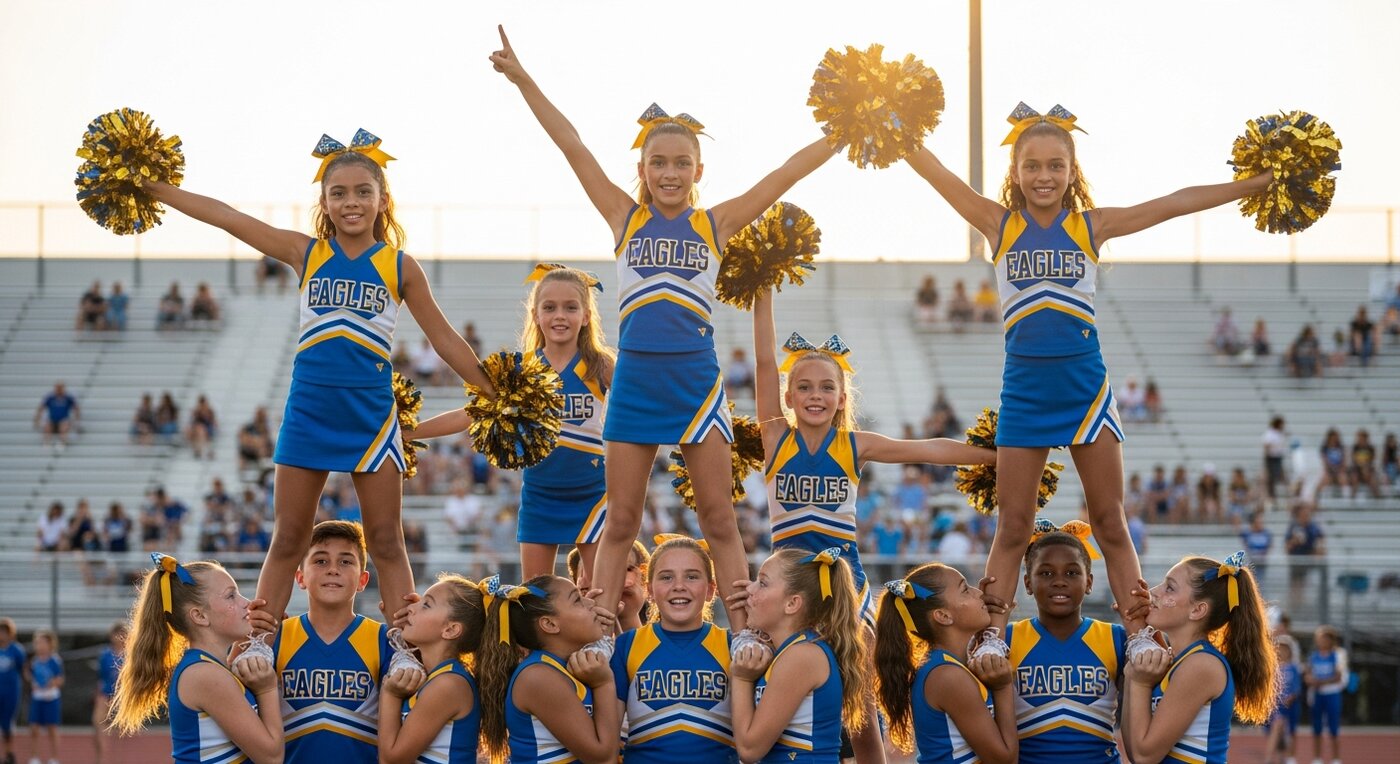
Which Event-Based Fundraisers Work Best for Cheer Teams?
Events like car washes, dance-a-thons, and clinics turn team visibility into cash by offering a straightforward service or entertainment to the neighborhood. A car wash can bring steady hourly income with low supply costs.
A dance-a-thon raises funds through per-minute pledges and gets families involved, and cheer clinics bring in younger athletes who pay for instruction.
Run events well by assigning volunteer roles (site lead, cash handler, promotion lead), estimating supplies, and building a promotion timeline that reaches local families.
What Product Sales Generate the Most Funds Raised for Cheer Fundraisers?
Product fundraisers—spirit wear, snack or candy sales, raffle tickets, and digital discount cards—convert design and inventory into steady income when targeting families, alumni, and local customers.
Spirit wear usually delivers higher per-item margins when run as a pre-sale to avoid excess stock, while digital discount cards have very low overhead and are easy to share by phone.
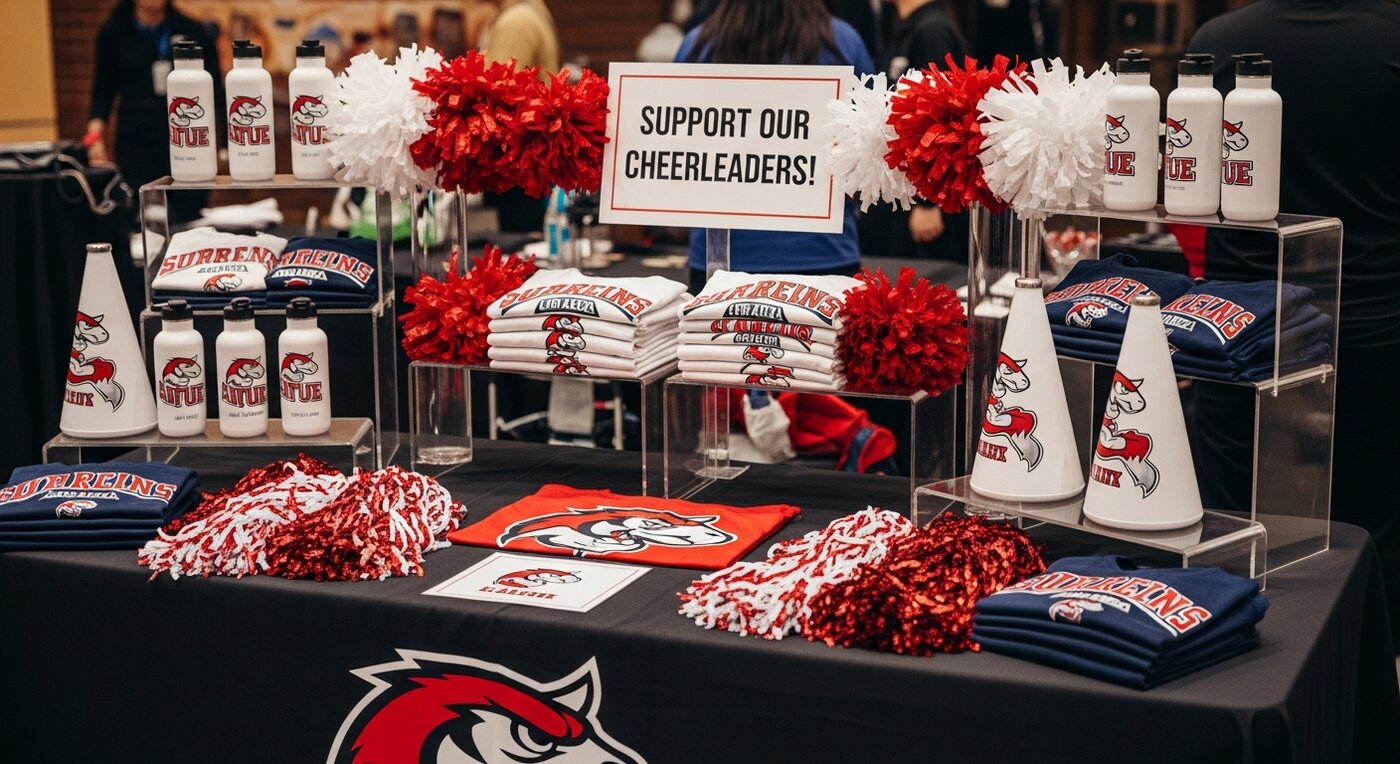
Fundraising Method Comparison
| Fundraising Idea | Estimated Cost | Estimated Revenue | Best For |
|---|---|---|---|
| Car wash fundraiser | Low ($50-$200 supplies) | $300-$1,000/day | Short-term travel funds |
| Cheer clinic fundraiser | Low (materials, instructors) | Moderate-High (per-attendee) | Youth outreach + uniforms |
| Spirit wear sales | Medium (design/proofing) | Variable (high margin) | Competition fees |
| Digital discount card | Very Low (digital delivery) | Moderate (per-card) | Recurring donor support |
Use this comparison to prioritize fundraisers based on cost-to-reward and the specific financial target the team needs to hit.
How to Plan and Promote a Cheer Fundraiser
Plan using a simple sequence: Plan, Promote, Execute, Follow up. Set a clear fundraising goal, break it into milestones, and assign roles with time estimates for volunteers and parents.
Set a clear fundraising goal and break it into milestones with assigned roles and time estimates.
Combine social media, email, school announcements, and local press for promotion.
Be explicit about what money will fund and how donors see impact to boost conversions.
After the event, reconcile finances and send thank-you communications.
Use donor retention tactics like recurring giving pages to turn one-time donors into sustained supporters.
Sample Budget Template
| Budget Line | Est. Cost | Notes |
|---|---|---|
| Spirit Wear Production | $200-$600 | Use pre-orders to avoid excess stock; consider drop-ship |
| Event Supplies | $50-$200 | Signage, payment processing, refreshments |
| Marketing & Promotion | $50-$150 | Flyers, social media ads, email tools |
| Venue/Permits | $0-$300 | School gym often free; check permit requirements |
| Digital Cards Setup | $0-$50 | Very low overhead with digital delivery |
Low-cost fundraisers scale when teams mobilize volunteers efficiently and form local partnerships that boost margins.
How Can Online Fundraising Boost Support for the Cheer Team?
Online fundraising expands the donor base beyond the neighborhood with team storefronts for spirit wear, and mobile-friendly digital discount card campaigns. An ecommerce storefront turns supporters into repeat buyers when paired with email and social follow-ups.
Platform Comparison for Cheer Fundraisers
| Platform | Key Features | Mobile Experience | Fees | Best Use Case |
|---|---|---|---|---|
| Team fundraising portals | Seller tracking, leaderboards | Mobile dashboards | Variable | Multi-seller product drives |
| General donation pages | Simple donation forms, receipts | Fast mobile giving | Low-Moderate | Ongoing donor programs |
| Ecommerce storefronts | Product SKUs, carts, fulfillment | Full mobile commerce | Processing fees | Spirit wear and merch |
Pick a platform by balancing fees, mobile UX, and integrations. Prioritize platforms that reduce donor friction and help maintain momentum.
What Are the Best Social Media and Email Tactics?
Use social and email together: social raises awareness and drives traffic; email converts with direct asks and updates. Keep a content calendar with posts that mix emotional stories (team impact), practical asks (donation links), and urgency signals (deadlines).
Run segmented email sequences for parents, alumni, and local businesses. Mobile-first content—short routine videos, progress thermometers, and swipe-up donation prompts—performs best where most supporters engage.
Story Posts
Feature athletes and explain what funds will cover.
Progress Updates
Share fundraising thermometers and milestones.
Segmented Emails
Target parents, alumni, and local businesses with tailored asks.
Frequently Asked Questions
Which cheerleading fundraisers work best for teams?
A good fundraiser balances expected revenue, volunteer needs, and the team's goal. Event fundraisers deliver quick local income, product sales offer predictable margins when promoted well, and online campaigns expand reach and invite repeat giving. A simple mix—one major event, one product push, and an ongoing online effort—diversifies income and lowers risk.
What product sales generate the most funds raised for cheer fundraisers?
Spirit wear usually delivers higher per-item margins when run as a pre-sale to avoid excess stock, while digital discount cards have very low overhead and are easy to share by phone. Consider minimum order quantities for apparel, drop-ship versus bulk ordering, and print turnaround times when planning.
How to organize a successful cheer car wash or dance-a-thon?
Both need a clear timeline, defined volunteer roles, supplies, pricing, and a promotion plan. For a car wash: secure a visible site, schedule shifts, set pricing, and provide waterproof signage. For a dance-a-thon: collect pledges, plan music and refreshments, and offer prize incentives for top fundraisers.
What are the best social media and email tactics for cheer fundraising?
Use social and email together: social raises awareness and drives traffic; email converts with direct asks and updates. Keep a content calendar with posts that mix emotional stories, practical asks, and urgency signals. Mobile-first content—short routine videos, progress thermometers, and swipe-up donation prompts—performs best.
How can parents and teachers partner to support fundraisers?
Parents and teachers drive volunteer recruitment, communications, and financial oversight. Define roles—volunteer coordinator, treasurer, promotion lead, logistics manager—with clear time commitments. Use simple tools like group messaging apps and shared calendars to schedule shifts and share materials.
Which fundraisers fit uniforms, travel, or competition fees?
Match fundraiser scale to the financial target. Smaller, repeatable campaigns like monthly snack subscriptions or digital discount cards cover items like warm-ups, while large events or pre-sale spirit wear drives are better for travel or multi-thousand-dollar competition budgets.